


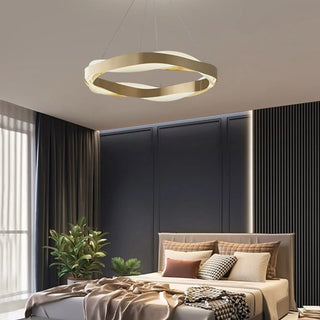
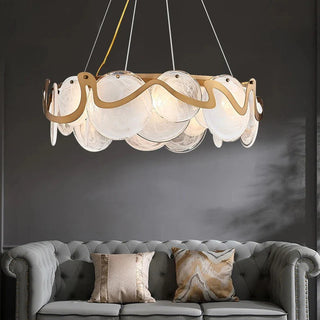

Half the fixtures labeled "mid-century" online are really just brass and walnut with a modern silhouette, and the other half are genuine reproductions of shapes designed in the 1940s through the 1960s. The difference matters, because true mid-century pieces share a specific vocabulary: tapered legs, globe or drum shades, and organic curves that avoid both the hard geometry of Art Deco and the flat minimalism of Scandinavian design. Here is what to actually look for, and how to use it without the room reading as a period set.
Already know what you're shopping for? Here are the mid-century lighting fixtures in pendant, floor, table, and wall styles.
What defines genuine mid-century lighting?
Mid-century design grew out of postwar optimism about new materials and manufacturing, which is why the shapes feel confident rather than fussy. A few traits separate it from other vintage-adjacent styles.
| Trait | What to look for |
|---|---|
| Organic silhouette | Tapered arms, globe or drum shades, curves rather than hard angles |
| Warm natural materials | Walnut, teak, and brass, often paired with opaline or frosted glass |
| Starburst or Sputnik forms | Multiple arms radiating from a central point, a signature mid-century shape |
| Restrained color | Warm woods and metals over bright lacquer or pattern |
Genuine mid-century pieces avoid the crystal and hard-edged symmetry of Art Deco and the pale, unadorned minimalism of Nordic style. If a fixture has cut crystal or stepped geometric tiers, it is reading as Deco. If it is stark white with no wood or brass at all, it is reading as Scandinavian, not mid-century.
Which fixture types work best in a mid-century scheme?
Some fixture types carry the era's shapes more naturally than others, and picking the right type matters more than picking the right finish.
- Pendant lights over a kitchen island or dining table: globe and drum shapes are the most recognizable mid-century silhouette and read correctly from across a room.
- Floor lamps beside a sofa or reading chair: tapered wood legs with a drum shade are close to a design signature of the era.
- Wall sconces in a hallway or stairwell: simpler shapes here, since a hallway rarely benefits from a loud starburst piece.
- A starburst or Sputnik chandelier as a single statement piece in a dining room or entry, used once per home rather than repeated in multiple rooms.
Ready to see fixtures built around those shapes? Browse mid-century lighting in pendant, floor, and wall styles.
How do I pair mid-century lighting with a modern room?
Most homes today are not fully mid-century, and the style holds up well as an accent inside a contemporary room rather than a full period recreation.
- Let the fixture's wood tone match one other wood surface in the room, a console table or floor, rather than every piece of furniture.
- Use brass or warm metal finishes consistently across the fixtures you add, since mixing warm mid-century brass with cool chrome breaks the look.
- Keep upholstery and rugs closer to solid or subtly textured than boldly patterned, so the fixture's organic shape stays the visual focus.
- Add one starburst or Sputnik piece per home at most. Two in adjoining rooms starts to feel like a themed rental rather than a considered choice.
Mid-century vs Art Deco vs Nordic: how do I tell them apart when shopping?
These three vintage-adjacent styles get lumped together online, but they pull from different decades and materials, and mixing them by accident is the most common styling mistake I see.
| Style | Shapes | Materials | Feel |
|---|---|---|---|
| Mid-century | Organic curves, tapered legs, globes | Walnut, teak, brass, opaline glass | Warm, confident, postwar optimism |
| Art Deco | Hard geometric angles, stepped tiers | Brass, chrome, cut crystal | Glamorous, symmetrical, high-polish |
| Nordic | Simple, unadorned forms | Pale wood, matte metal, frosted glass | Calm, minimal, understated |
If you are unsure which bucket a fixture actually falls into, check the materials first. Crystal points to Deco, pale unfinished wood points to Nordic, and warm walnut or brass with a curved or globe shape points to mid-century.
Not sure which era fits your room? Reach out to our team with a photo of your space and we'll help you narrow it down.
Building your mid-century lighting plan step by step
Plan mid-century lighting in this order: pick the fixture type by room, then match materials, then limit statement pieces.
- Choose pendant lights for kitchen islands and dining tables, floor lamps for seating areas, sconces for hallways.
- Match wood tone across the fixture and at least one other surface in the room.
- Keep metal finishes consistent, brass or warm bronze, across every mid-century piece you add.
- Limit starburst or Sputnik chandeliers to one per home.
- Check that materials avoid crystal (Deco) or bare pale wood with no metal (Nordic), which signal a different era entirely.
For general chandelier sizing once you've picked a fixture, see our chandelier size guide.
Ready to shop the full range? Browse mid-century lighting fixtures in walnut, brass, and globe-shade styles.
About the author
Konstantin Khanasiuk is the founder of Mirodemi and works with luxury lighting day to day, helping homeowners and designers choose fixtures that fit a specific design era without tipping into costume. He writes from hands-on experience sourcing and shipping fixtures across vintage-inspired and contemporary styles alike.
Frequently asked questions
What makes a fixture genuinely mid-century instead of just retro?
Organic tapered silhouettes, globe or drum shades, and warm materials like walnut and brass, often in a starburst or Sputnik form. Crystal and hard geometric tiers signal Art Deco instead, and bare pale wood with no metal signals Nordic.
Which rooms suit mid-century lighting best?
Pendant lights over kitchen islands and dining tables, floor lamps beside seating, and one starburst chandelier per home as a statement piece in a dining room or entry.
Can I mix mid-century lighting with modern furniture?
Yes. Match the fixture's wood tone to one other wood surface in the room, keep metal finishes consistent, and favor solid or subtly textured upholstery so the fixture's shape stays the focal point.
How do I avoid mixing mid-century with Art Deco or Nordic by accident?
Check materials first. Crystal and cut glass point to Deco, bare pale wood with no metal points to Nordic, and warm walnut or brass with curved or globe shapes points to mid-century.
Sources
Design history references: mid-century modern lighting characteristics (1940s-1960s), organic form and material use Interior design guidance: distinguishing mid-century, Art Deco, and Scandinavian lighting styles
Not sure which fixture fits your space?
Send room size, ceiling height and a photo. Our team will suggest sizes and models that fit your project.
Not sure which fixture fits your space?
Send room size, ceiling height and a photo. Our team will suggest sizes and models that fit your project.