


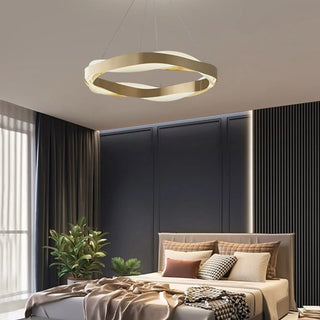
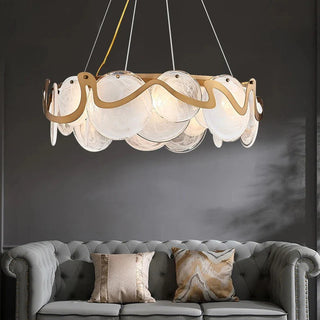

Japandi gets used as a catch-all for "minimal and wood-toned," but the style is more specific than that. It is a real fusion of two design traditions: Japanese wabi-sabi, which values imperfect, handmade natural materials, and Scandinavian hygge, which values warmth, function, and restraint. When a fixture nails both halves at once, a room feels calm without feeling empty. Here is what actually defines the look, and how to bring it into a home one fixture at a time.
Looking for fixtures already built around this style? See our Japandi lighting collection.
What actually makes a fixture read as Japandi?
Japandi lighting draws from a narrow, consistent material palette rather than a specific silhouette, which is part of why it is easy to get wrong.
| Trait | What to look for |
|---|---|
| Natural, tactile materials | Bamboo, paper, marble, warm wood, woven fabric |
| Soft, diffused light | Paper or fabric shades that scatter light rather than expose a bare bulb |
| Calm geometric forms | Simple drums, discs, and clean linear shapes, no ornate detail |
| Muted, warm palette | Black, white, beige, and warm wood tones over bright color or heavy metallic shine |
A fixture with cut crystal or a lot of polished chrome is not Japandi, even if the silhouette is simple. The material has to carry the warmth. That is the detail most generic "minimalist" fixtures miss.
Which rooms and fixture types suit Japandi lighting best?
Japandi works room by room rather than as an all-or-nothing redesign, and certain fixture types carry the look more naturally than others.
- Paper or bamboo pendant lights over a dining table, where the diffused glow does most of the work.
- Marble-based table and floor lamps in a living room or bedroom, for a grounded, tactile anchor.
- Simple fabric or marble wall sconces in a hallway or reading nook, kept understated rather than decorative.
- A single minimalist chandelier, black or gold with clean geometric lines, as the one statement piece in a dining or living space.
Ready to see the range? Browse Japandi lighting fixtures in pendant, floor, table, and wall styles.
How do I layer Japandi lighting through a whole home without it feeling flat?
The risk with Japandi is that an entire home in muted tones and soft light can start to feel monotonous instead of calm. Layering fixes that.
- Vary the material room to room. Try paper in the dining room, marble in the living room, bamboo in the bedroom, so each space still feels distinct.
- Mix warm and cool light temperature slightly between rooms rather than using one flat setting everywhere.
- Keep one fixture per room as the visual anchor, and let the rest stay quiet and functional.
- Pair the lighting with at least one contrasting texture nearby, a woven rug or a ceramic vase, so the room does not read as one uniform surface.
What mistakes make Japandi lighting look generic instead of intentional?
I see the same handful of mistakes when people try to shop this style without a plan.
- Choosing an all-metal fixture with no wood, paper, or fabric element, which just reads as plain modern rather than Japandi.
- Overlighting a room with several bright cool-toned fixtures, which fights the calm, diffused quality the style depends on.
- Mixing in a heavily ornate or crystal piece "for contrast," which breaks the restraint that makes Japandi read as intentional.
- Treating every room identically instead of varying material and shape slightly, which flattens the whole home into one note.
Building your Japandi lighting plan step by step
Here is the order I recommend working through a home.
- Pick your anchor material per room: paper, bamboo, marble, or warm wood.
- Choose one statement fixture per key room, dining table pendant or living room floor lamp.
- Fill in secondary lighting, wall sconces and smaller table lamps, in a complementary but not identical material.
- Check your light temperature. Warm light supports the hygge half of the style better than cool white.
- Step back and confirm no single fixture is fighting for attention against the others.
For general chandelier sizing once you've settled on a fixture, see our chandelier size guide.
Not sure which pieces fit your layout? Reach out to our team and we will help you plan it room by room.
Ready to shop the full range? Browse Japandi lighting in paper, bamboo, marble, and wood-toned styles.
About the author
Konstantin Khanasiuk is the founder of Mirodemi and works with luxury lighting day to day, helping homeowners and designers translate design styles like Japandi into a real, room-by-room lighting plan rather than a single statement purchase.
Frequently asked questions
What is the difference between Japandi and plain minimalist lighting?
Japandi specifically fuses Japanese wabi-sabi materials, paper, bamboo, natural wood, with Scandinavian warmth and restraint. Plain minimalist lighting can be all metal and glass with no natural material at all, which misses the warmth half of Japandi.
Can I mix Japandi lighting with existing modern furniture?
Yes. Japandi pairs naturally with contemporary furniture as long as you introduce at least one natural material, paper, bamboo, or warm wood, per room so the lighting does not read as purely industrial.
How many Japandi fixtures should one room have?
One statement piece, a pendant or floor lamp, plus one or two quieter secondary fixtures like wall sconces. More than that starts to compete rather than layer.
What is the most common mistake when shopping for Japandi lighting?
Picking an all-metal, all-cool-toned fixture because it looks simple. Simplicity alone is not Japandi. The material needs to carry warmth and texture for the style to actually read.
Sources
Design history references: wabi-sabi and Japanese minimalist design principles, Scandinavian hygge and warmth in interior lighting Interior design guidance: material and light-temperature choices in Japandi-style interiors
Not sure which fixture fits your space?
Send room size, ceiling height and a photo. Our team will suggest sizes and models that fit your project.
Not sure which fixture fits your space?
Send room size, ceiling height and a photo. Our team will suggest sizes and models that fit your project.