


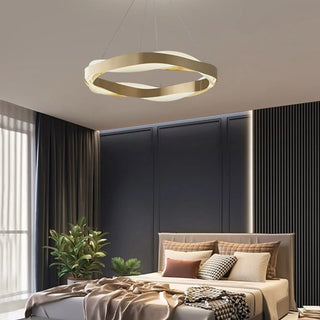
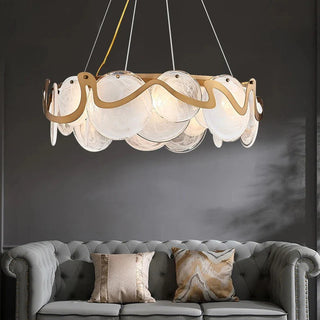

Quick answer: Murano-style glass chandeliers use hand-shaped, layered art glass — in amber, clear, smoke, olive, or multicolor tones — set into brass or chrome frames. They come in tiered, cascading, linear, and rectangular forms from roughly $500 to $2,300+, and suit living rooms, dining rooms, foyers, and staircases. Size and hang them the same way you would any chandelier of that shape; the glass is what changes the look, not the sizing math.
What is Murano glass, and is it the real thing?
Murano glass takes its name from the island of Murano near Venice, where glassblowers have hand-shaped colored art glass for centuries. True antique Murano pieces, blown on the island by certified furnaces, carry a price that reflects that provenance.
Most chandeliers sold today, including Mirodemi's collection, are Murano-style: glass made using the same hand-textured, layered techniques and color palette, without the Venice-furnace certification and its price tag. If a listing doesn't say "genuine Murano" or name a specific furnace, assume it's Murano-style — which is not a downgrade in looks, just in origin story and cost. It's worth asking directly if authenticity matters to you.
What makes Murano-style glass different from ordinary glass fixtures
- Hand-shaped, not molded. Each piece is worked while hot, so no two shades are perfectly identical — you'll see subtle variation in swirl, bubble, and thickness from piece to piece.
- Layered color. Rather than a single tint, Murano-style glass often layers color through the body of the glass, which is why it looks different depending on whether the light is on or off, and from different angles.
- Texture over polish. Where cut crystal relies on faceted precision, Murano-style glass leans into organic texture — ribbing, bubbles, or a slightly uneven surface are features, not flaws.
Colors and forms to expect
Murano-style chandeliers typically come in:
- Amber and smoke — warm, moody tones that read well in dining rooms and give off a golden glow when lit.
- Clear and olive — lighter, more versatile tones that work in living rooms and foyers without dominating the palette.
- Multicolor — layered or mixed hues for a more sculptural, statement piece.
Shapes range from single tiered chandeliers to long cascading and rectangular designs, usually set in warm brass or polished chrome. Matching wall sconces are common, which makes it easy to extend the look from a dining room chandelier to a hallway or staircase.
Where Murano-style glass works best
- Dining room: an amber or smoke tiered chandelier over the table brings warmth without the hard sparkle of crystal.
- Foyer or staircase: a cascading or rectangular Murano-style piece reads as sculptural from multiple angles, which suits a space people walk past rather than sit under.
- Living room: clear or multicolor pieces work as a softer statement than a crystal chandelier, especially in rooms with a lot of wood or warm tones already.
Sizing and care
Size a Murano-style chandelier the same way you'd size any fixture of its shape: for a round or tiered piece over a table, aim for a diameter of about half to two-thirds the table's width, and hang the lowest point 30–36 inches above the tabletop, or roughly 7 feet above the floor in an open space.
Because the material is glass rather than stone or metal, cleaning is straightforward — a soft, dry cloth or a barely damp microfiber cloth for tougher spots. Avoid ammonia-based glass cleaners on frames with a brass or gold finish, since they can dull the metal over time.
Bottom line
Murano-style glass chandeliers are a way to get the color, texture, and hand-crafted look of Venetian glass art without shopping for an antique. Pick amber or smoke for warmth, clear or olive for versatility, and size the fixture the same way you would any chandelier of its shape.
Not sure which fixture fits your space?
Send room size, ceiling height and a photo. Our team will suggest sizes and models that fit your project.
Not sure which fixture fits your space?
Send room size, ceiling height and a photo. Our team will suggest sizes and models that fit your project.