


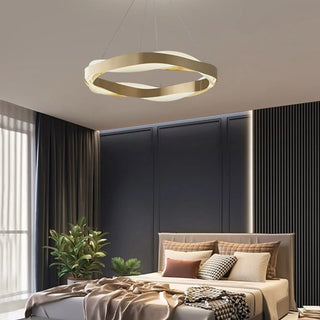
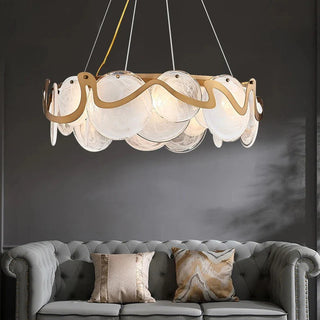

Quick answer: Marble lighting uses natural veined stone as a base, body, or shade — in chandeliers, table and floor lamps, and wall lights — usually paired with brass, gold, or black metal. Pieces run from about $280 for a wall lamp to $1,150+ for a statement floor lamp, and suit dining rooms, living rooms, bedrooms, and studies.
What is marble lighting?
Marble lighting uses the stone in one of two ways: as a solid base or body (common in table and floor lamps), or as a shade or ring element (common in chandeliers and wall lamps). Either way, the appeal is the same — marble's natural veining means every piece has a slightly different pattern, and the stone looks intentional and grounded even when the light is switched off.
Unlike alabaster, which is prized for translucency, marble in lighting is usually used for its weight, texture, and visual presence rather than to diffuse light. A marble table lamp base or a marble ring chandelier still uses a conventional shade or LED element for the actual light source.
Forms to expect
- Marble ring chandeliers — a circular marble element combined with a metal frame, for living and dining rooms.
- Marble table and desk lamps — a solid marble base (often gray, white, or veined) with a fabric or glass shade, sized for nightstands, consoles, and desks.
- Marble floor lamps — a marble base anchoring a slim metal stem, sometimes combined with crystal accents for extra sparkle.
- Marble wall lamps — flush or projecting wall lights with a marble or marble-look panel, which double as a piece of wall art when unlit.
Metal accents are typically brass, gold, or black, chosen to contrast with or complement the stone's natural tone.
Is the marble real stone?
Genuine marble lighting uses actual quarried stone, which is why veining varies piece to piece and why the material has real weight in your hand. If durability and authenticity matter, look for listings that specify "marble" rather than "marble-look" or "faux marble," which typically use resin or composite materials made to resemble stone.
Which room suits which piece
- Dining room or living room: a marble ring chandelier works as a quieter alternative to a crystal chandelier — architectural rather than sparkly.
- Bedroom: a marble table lamp on each nightstand adds material contrast to soft bedding and fabric.
- Study or home office: a marble desk lamp anchors a desk with more visual weight than a typical metal task lamp.
- Entryway or hallway: a marble wall lamp works where floor space is tight but you still want a material statement.
Sizing and placement
For table and desk lamps, keep the shade at roughly eye level when seated — around 58–64 inches from the floor once placed on furniture. For a marble ring chandelier over a dining table, aim for a diameter about half to two-thirds the table's width, hung so the lowest point sits 30–36 inches above the tabletop. Floor lamps generally work best placed beside seating, with the shade at or slightly below head height when seated nearby.
Care
Marble is porous, so wipe up spills quickly and avoid placing table lamps where drinks are routinely set down without a coaster nearby. Dust with a soft, dry cloth; avoid acidic or ammonia-based cleaners, which can etch the stone's surface over time.
Bottom line
Marble lighting brings the weight and one-of-a-kind veining of natural stone into everyday fixtures — grounding a room the way a piece of furniture does, rather than just lighting it. Choose a ring chandelier for a dining or living room, and a table or floor lamp wherever you want that same material presence at a smaller scale.
Placing wall sconces?
Send the wall dimensions and a photo. We will suggest size, height and spacing with matching models.
Placing wall sconces?
Send the wall dimensions and a photo. We will suggest size, height and spacing with matching models.