


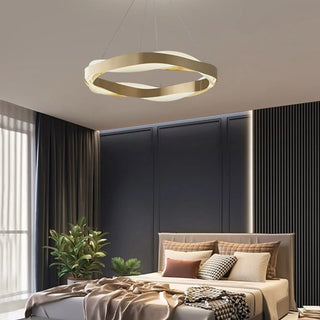
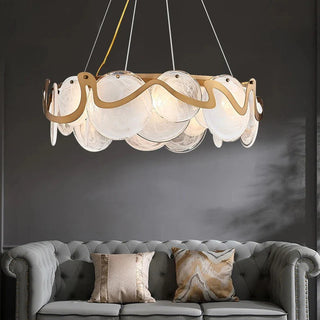

A living room lit by one ceiling fixture looks flat the moment the sun goes down. I build every living room around three layers, ambient, task, and accent light, sized and placed so the room works for movie night, reading, and everything in between. Here is the brightness target for each layer, the fixture size math for your ceiling, and where to put floor lamps and sconces so nothing goes dark when you turn off the overhead light.
Already know what you're shopping for? Here are the living room lighting fixtures sized for chandeliers, floor lamps, and wall sconces in one place.
How bright should a living room be?
Ambient light, the general glow that fills the room, needs roughly 10 to 20 foot-candles for comfortable evening use, per the residential illumination levels published by the Lighting Design Lab. That range covers most living rooms, with the higher end suited to larger or darker-toned rooms.
Task light is a different job. Plan for 30 to 50 foot-candles at the surface wherever someone reads, works a puzzle, or plays a board game, from a floor lamp or table lamp aimed at the spot, not from the ceiling fixture. A single overhead light bright enough to read by usually overlights the rest of the room.
Accent light runs lower than ambient, often half that level or less, and its job is to add depth rather than brightness. A picture light over artwork or a low shelf light behind books gives the room a lit-up feel late at night even with the main fixtures off.
How do you layer lighting in a living room?
Each layer earns its own switch or dimmer. Wiring all three into one control means you're stuck choosing between too bright and too dark, since ambient, task, and accent light do different jobs at different times of day.
| Layer | Typical fixture | Brightness target | Control |
|---|---|---|---|
| Ambient | Chandelier, flush mount, or recessed cans | 10 to 20 foot-candles | Dimmer on its own switch |
| Task | Floor lamp, table lamp, or reading sconce | 30 to 50 foot-candles at the surface | Lamp switch or plug-in dimmer |
| Accent | Picture light, shelf lighting, low-voltage strip | Roughly half the ambient level | Separate circuit or plug-in timer |
A room with only the ambient layer working reads as either too bright to relax in or too dim to read in, since one fixture is being asked to do three jobs it wasn't sized for.
What size ceiling fixture fits a living room?
Add the room's length and width in feet, then read that number in inches for the fixture's diameter. A 12 by 16 foot living room (28 combined feet) suits a 24 to 28 inch chandelier or flush mount, while a 20 by 24 foot great room (44 combined feet) supports something closer to 40 to 44 inches.
| Room size | Combined length + width | Fixture diameter | Typical fixture type |
|---|---|---|---|
| Small living room | 12 x 16 ft (28 ft) | 24 to 28 in | Flush mount or compact chandelier |
| Medium living room | 16 x 20 ft (36 ft) | 32 to 36 in | Chandelier or multi-light fixture |
| Large living room or great room | 20 x 24 ft (44 ft) | 40 to 44 in | Chandelier, often paired with recessed ambient light |
On a standard 8 foot ceiling, keep the fixture's bottom at least 7 feet above the floor and lean toward a flush or semi-flush mount rather than a low-hanging chandelier. A vaulted or 10 foot-plus ceiling has room for a larger drop and often pairs a chandelier with recessed cans to fill in ambient light the chandelier alone can't reach into the corners.
Ready to match a fixture to your room's numbers? Browse living room lighting fixtures filtered by diameter and mounting style, sized for small, medium, and large living rooms.
Where should floor lamps and sconces go?
Set a floor lamp so the bottom of the shade sits at or just below eye level when you're seated in the chair beside it, usually 40 to 42 inches above the floor. Place it slightly behind and to the side of the seat so the light falls over your shoulder onto the page or the table, not straight into your eyes.
| Fixture type | Height above floor | Placement notes |
|---|---|---|
| Floor lamp (reading) | 40 to 42 in (shade bottom) | Behind and beside the seat, light falling over the shoulder |
| Wall sconce (flanking media wall or mantel) | 60 to 66 in (center) | Symmetrical pair, 12 to 18 in out from the center feature |
| Table lamp (console or side table) | Shade bottom near seated eye level | On a console or end table within reach of the seat |
Sconces flanking a media wall, fireplace, or built-in shelving fill the vertical space that a floor lamp can't reach and stay on even when the seating area is empty. For the finish and style choices that work well on a living room sconce specifically, I cover that separately in our guide to wall sconces in modern interiors.
What mistakes make a living room feel flat or uncomfortable?
The same handful of mistakes keep showing up when I walk into a living room lighting plan that isn't working. I see at least one of these on almost every room I get called in to fix.
- One ceiling fixture doing the job of all three layers, with no floor or table lamps.
- Mixed color temperatures between the chandelier and the lamps, so the room looks patchy instead of cohesive.
- No dimmer on the ambient layer, leaving the room either fully bright or off.
- A floor lamp shade mounted too high or too low for the seated eye level beside it.
- Accent lighting skipped entirely, so art and shelving go dark the moment the main light is off.
Building your living room lighting plan step by step
Plan a living room in this order: measure the room, size the ceiling fixture, then add task and accent layers around where people actually sit. Working in that order keeps the plan built around how the room gets used, not around a single fixture picked first.
- Measure the room's length and width in feet.
- Size the ceiling fixture's diameter using the length-plus-width formula, adjusted for ceiling height.
- Put the ambient layer on its own dimmer, separate from lamps and accent lighting.
- Add a floor or table lamp at every seat used for reading, working, or games.
- Add accent lighting for art, shelving, or a media wall so the room reads as lit even with the ambient layer off.
- Pick one warm color temperature, 2700K to 3000K, across every fixture in the room.
Ready to see fixtures sized for these numbers? Browse living room lighting fixtures built for small, medium, and large living rooms, with diameter and mounting type listed on every product.
Not sure what size or brightness fits an unusual room? Send me your living room's length, width, and ceiling height through the free custom lighting quote and I will recommend a size and brightness target for your space, no cost.
About the author
Konstantin Khanasiuk is the founder of Mirodemi and works with luxury lighting day to day, helping homeowners and designers size and choose fixtures for living rooms, bedrooms, hallways, and kitchens. He writes from hands-on experience selecting and shipping fixtures for real rooms, not showroom mockups.
Frequently asked questions
How bright should a living room be?
Roughly 10 to 20 foot-candles of ambient light for everyday evening use, with 30 to 50 foot-candles of task light at any spot used for reading or games. Accent light runs at about half the ambient level.
What size chandelier or ceiling light fits a living room?
Add the room's length and width in feet for the diameter in inches. A 12 by 16 foot living room suits a 24 to 28 inch fixture, a 20 by 24 foot great room suits 40 to 44 inches.
How many lamps does a living room need?
At minimum, one floor or table lamp at every seat used for reading or close work, plus one accent source for art or shelving. A typical living room ends up with two to four lamps beyond the ceiling fixture.
What color temperature is best for a living room?
Warm, 2700K to 3000K, across every fixture in the room. Mixing warm and cool bulbs is what makes a room look patchy instead of cohesive.
Sources
Lighting Design Lab: Foot Candle Lighting Guide (residential illumination levels)
Illuminating Engineering Society (IES): recommended interior lighting levels for residential living spaces
Not sure which fixture fits your space?
Send room size, ceiling height and a photo. Our team will suggest sizes and models that fit your project.
Not sure which fixture fits your space?
Send room size, ceiling height and a photo. Our team will suggest sizes and models that fit your project.