


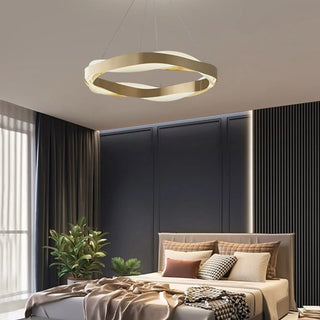
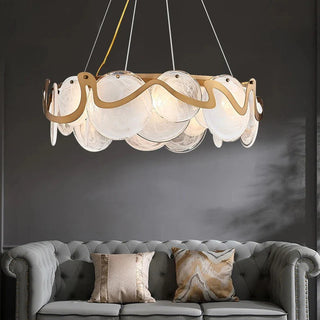

A bedroom that only gets one bright ceiling light feels like a hotel room, not a place to wind down. I keep ambient light low, around 10 to 20 foot-candles, add real task light at 20 to 30 foot-candles for reading, and size the ceiling fixture off the room's length and width, not off whatever looked good in a showroom. Here is the brightness target, the sconce and pendant placement, and the fixture size math for a standard or primary bedroom.
Already know your room's dimensions? Here are the bedroom light fixtures sized for standard and primary bedrooms, with diameter and mounting type listed on each one.
How bright should a bedroom be?
A bedroom needs roughly 10 to 15 foot-candles of ambient light for comfortable evening use, per the residential illumination levels published by the Lighting Design Lab. That is well below what a kitchen or bathroom needs, and it is supposed to be, since the room's job is to feel calm, not to light up a task.
Reading in bed is a different job. Plan for 20 to 30 foot-candles right at the pillow, from a bedside sconce, pendant, or lamp aimed at the page, not from the ceiling fixture. A single ceiling light set bright enough to read by usually overlights the rest of the room and makes it harder to wind down.
Put both levels on separate dimmers where you can. Ambient light dims down for evening, task light stays bright enough to read, and the same fixtures work for both morning routine and bedtime without a single compromise setting in between.
Where should bedside sconces or pendants go?
Center a bedside sconce about 55 to 60 inches above the floor, which usually lands 20 to 26 inches above the top of the mattress. Set it 6 to 12 inches out from the edge of the headboard so the light falls over your shoulder onto the page instead of straight down into your eyes.
| Fixture type | Height above floor | Horizontal offset from bed edge |
|---|---|---|
| Wall sconce | 55 to 60 in (center) | 6 to 12 in |
| Pendant (hung low) | Bottom 6 to 12 in above nightstand surface | Centered over nightstand |
| Table lamp | Shade bottom near eye level when seated up | On nightstand, no offset needed |
A pendant reads more decorative than a sconce and frees up nightstand space, but only if the bottom of the shade sits close enough to the nightstand to actually throw light on a book. Hang it more than a foot above the surface and it turns into ambient light instead of a reading fixture.
Sit in your normal reading position before you commit to a height. A sconce mounted for someone who reads sitting bolt upright will sit too high for someone who reads propped low on pillows, and the four inches of difference is enough to change how the light falls on the page.
For the finish and style choices that work well on a bedside sconce specifically, I cover that separately in our guide to wall sconces in modern interiors.
What size ceiling fixture fits a bedroom?
Add the room's length and width in feet, then read that number in inches for the fixture's diameter. A 10 by 12 foot bedroom (22 combined feet) suits an 18 to 22 inch flush mount or small chandelier, while a 14 by 16 foot primary bedroom (30 combined feet) supports something closer to 26 to 30 inches.
| Room size | Combined length + width | Fixture diameter | Typical fixture type |
|---|---|---|---|
| Standard bedroom | 10 x 12 ft (22 ft) | 18 to 22 in | Flush mount or small chandelier |
| Medium bedroom | 12 x 14 ft (26 ft) | 22 to 26 in | Semi-flush or modest chandelier |
| Primary bedroom | 14 x 16 ft (30 ft) | 26 to 30 in | Semi-flush or chandelier, 9 ft+ ceiling |
On a standard 8 foot ceiling, subtract 2 to 4 inches from the formula's result and lean toward a flush or semi-flush mount. The extra few inches of clearance matters more in a bedroom than in a foyer, since you walk directly under the fixture on the way to bed with the lights half dimmed.
Ready to match a fixture to your bedroom's numbers? Browse bedroom light fixtures filtered by diameter and mounting style, sized for standard, medium, and primary bedrooms.
Flush mount, semi-flush, or chandelier: which fits your ceiling height?
| Fixture type | Best ceiling height | Visual weight | Typical use |
|---|---|---|---|
| Flush mount | 8 ft or lower | Low, unobtrusive | Standard bedrooms, low clearance |
| Semi-flush mount | 8.5 to 9.5 ft | Slightly more presence | Medium and primary bedrooms |
| Small chandelier | 9 ft or taller | Most decorative | Primary bedrooms with height to spare |
Keep the bottom of any hanging fixture at least 7 feet above the floor, the same clearance I use for any room people walk under at full height. A chandelier hung lower than that in a bedroom becomes something you duck around every night on the way to bed, which gets old fast no matter how good the fixture looks.
What mistakes make a bedroom feel like a hotel room?
The same handful of mistakes turn a bedroom into a flat, impersonal space instead of a place that actually feels like yours. I see at least one of these on almost every bedroom lighting plan I get called in to fix.
- One bright ceiling fixture as the only light source, with no separate task light for reading.
- Cool color temperature (4000K or higher) that makes the room feel clinical instead of restful.
- Bedside lamps or sconces mounted too high or too far from the bed to actually light a book.
- No dimmer, so the room is either fully bright or off with nothing calm in between.
- A ceiling fixture sized off a photo instead of the room's actual length and width.
Building your bedroom lighting plan step by step
Plan a bedroom in this order: measure the room, set your ambient and reading targets separately, size the ceiling fixture to the room, then place bedside light where you actually read. Working in that order keeps the plan built around how you use the room, not around a single fixture you liked first.
- Measure the room's length and width in feet.
- Size the ceiling fixture's diameter using the length-plus-width formula, adjusted for ceiling height.
- Choose flush mount for an 8 foot ceiling, semi-flush or a small chandelier only if the ceiling runs taller.
- Set ambient light to 10 to 15 foot-candles and put it on a dimmer.
- Add bedside sconces, pendants, or lamps sized to reach 20 to 30 foot-candles at the pillow.
- Pick one warm color temperature, 2700K to 3000K, across every fixture in the room.
Ready to see fixtures sized for these numbers? Browse bedroom light fixtures built for standard, medium, and primary bedrooms, with diameter and mounting type listed on every product.
Not sure what size or brightness fits an unusual room? Send me your bedroom's length, width, and ceiling height through the free custom lighting quote and I will recommend a size and brightness target for your space, no cost.
About the author
Konstantin Khanasiuk is the founder of Mirodemi and works with luxury lighting day to day, helping homeowners and designers size and choose fixtures for bedrooms, hallways, staircases, and kitchens. He writes from hands-on experience selecting and shipping fixtures for real rooms, not showroom mockups.
Frequently asked questions
How bright should a bedroom be?
Roughly 10 to 15 foot-candles of ambient light for everyday evening use, with 20 to 30 foot-candles of task light right at the pillow for reading. Put both on separate dimmers where you can.
What size ceiling fixture fits a bedroom?
Add the room's length and width in feet for the diameter in inches. A 10 by 12 foot bedroom suits an 18 to 22 inch flush mount, a 14 by 16 foot primary bedroom suits 26 to 30 inches.
How high should a bedside sconce be mounted?
About 55 to 60 inches above the floor, which usually lands 20 to 26 inches above the top of the mattress, set 6 to 12 inches out from the edge of the headboard.
What color temperature works best in a bedroom?
Warm, 2700K to 3000K, across every fixture in the room. Cooler light above 4000K reads clinical and works against the room's job of helping you wind down.
Sources
Lighting Design Lab: Foot Candle Lighting Guide (residential illumination levels)
Illuminating Engineering Society (IES): recommended interior lighting levels for residential bedrooms
Not sure which fixture fits your space?
Send room size, ceiling height and a photo. Our team will suggest sizes and models that fit your project.
Not sure which fixture fits your space?
Send room size, ceiling height and a photo. Our team will suggest sizes and models that fit your project.