


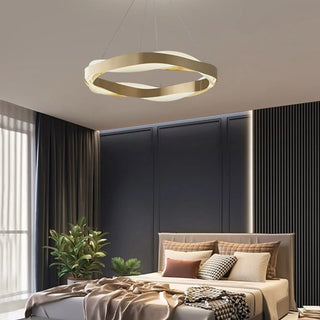
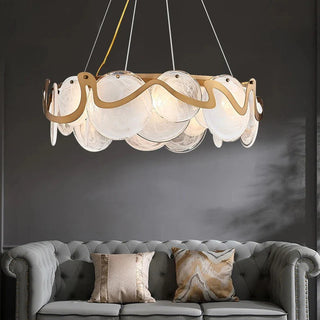

Quick answer: hang one pendant for every 24–30 inches of island length, keep the bottom of each shade 30–36 inches above the countertop, and leave 24–30 inches between pendants with at least 6 inches from each island edge. A 6-foot island takes two large or three small pendants; islands 7 feet and longer usually look better under one linear fixture. Aim for 300–500 lumens per pendant in warm 2700–3000K light, dimmable if you also dine at the island.
How many pendants does your kitchen island need?
Count one pendant per 24–30 inches of island length, and favor odd numbers on long islands — they read as intentional rather than symmetrical-by-accident. Two oversized shades can replace three small ones on a mid-size island if you want fewer, bolder shapes over the counter.
| Island length | Pendants | What works |
|---|---|---|
| Up to 4 ft (120 cm) | 1–2 | One statement pendant, or a matched pair of small shades |
| 5–6 ft (150–180 cm) | 2–3 | Two large or three small pendants, evenly spaced |
| 7–8 ft (210–240 cm) | 3, or 1 linear | Three pendants — or a single linear fixture for even coverage |
| 9 ft and longer | 3–4, or 1 linear | A long linear suspension avoids a "row of dots" effect |
What size should island pendants be?
Use this formula: pendant diameter = (island length in inches − total spacing) ÷ number of pendants, and keep the combined width of all shades under two-thirds of the island length. Example: a 72-inch island with three pendants and two 24-inch gaps leaves roughly 8 inches per shade — so choose either three slim pendants or step up to two 12–15-inch shades instead. Multi-head fixtures solve the math for you: the MIRODEMI Villars-sur-Var comes in configurations from 3 to 10 lights on one linear base, so the spacing is already even.
How high should pendants hang above the island?
Set the bottom of each pendant 30–36 inches (75–90 cm) above the countertop. Go to the lower end for pendants with open bottoms that could glare, and to the higher end if sightlines across the kitchen matter or the cook is tall. With ceilings above 9 feet, raise the fixture about 3 inches for each extra foot of ceiling height so the pendants stay in proportion.
How bright should kitchen island lighting be?
Plan 300–500 lumens per pendant, which lands most islands at 35–50 lumens per square foot of counter — enough for chopping without spotlight harshness. Choose warm light (2700–3000K) for luxury kitchens; it flatters stone and brass finishes. Make the circuit dimmable if the island doubles as a breakfast bar or evening seating: full power for prep, 30–40% for dinner. Many of our fixtures, like the Munsingen black crystal pendant, are offered in warm-light dimmable versions for exactly this reason.
When is a linear chandelier better than separate pendants?
Choose one linear fixture when the island is 7 feet or longer, when the ceiling is busy (beams, vents, sloped planes) and multiple canopies would look cluttered, or when you want unbroken task light with no dark stripes between shades. Linear fixtures for islands typically run 33–47 inches (85–120 cm) — the Muri bei Bern glass linear fixture comes in exactly those two lengths. Browse the full range of linear pendant lighting to compare lengths against your island.
What are the most common island lighting mistakes?
The five we see most: pendants hung too high (they become ceiling decor, not task light), shades too small for the island's mass, an even number of small pendants spaced too tightly, cool 6000K light in an otherwise warm-toned kitchen, and skipping the dimmer. Every one of these is cheaper to fix on paper than after installation — measure your island length first, then shop pendant lights for kitchen islands by the numbers above.
Kitchen island fixtures we recommend
Real examples from our catalog, sized for islands: the Orbe single pendant (from $375, gold, black, or chrome) for pairs and trios; the Ca' d'Andrea gold pearls chandelier (4 to 9 heads, from $890) when you want one sculptural piece; and the Villars-sur-Var linear (3–10 lights, from $801) for long islands. More options in kitchen and island light fixtures.
What finish and shade style should island pendants have?
Match the pendant finish to the kitchen's dominant hardware — faucet, cabinet pulls, range trim — or contrast deliberately: black fixtures over brass hardware is the one mix that reliably works. Open glass and crystal shades keep sightlines clear in open-plan kitchens and read lighter over small islands; solid metal shades focus light downward into a defined task pool and suit larger rooms where the island zone should feel separate. Gold and chrome versions of the same fixture almost always cost the same, so choose by palette, not price.
FAQ: kitchen island pendant quick answers
Can pendants hang off-center from the island?
No — center them on the island's length and width. An off-center run is visible from every seat in an open plan. If the junction box is off-center, have an electrician move it or use a canopy that allows cord offset.
Do island pendants need to match the dining fixture?
They should coordinate, not match: share one metal finish or one material family across both fixtures, and let the shapes differ. Identical fixtures in view of each other flatten the room.
What bulbs do luxury island pendants use?
Most of our island fixtures ship with integrated LEDs or take E12/E14 LED bulbs; every product page lists the socket, included bulbs and warm or cool light options, so check the listing before ordering spares.
How do you clean pendants over a cooking zone?
Wipe metal shades monthly with a damp microfiber cloth; for glass and crystal, a seasonal wipe with diluted isopropyl keeps grease film from dulling the sparkle. Power off first and avoid ammonia cleaners on finished metal.
About the author. Konstantin Khanasiuk leads lighting design at Mirodemi, helping homeowners and designers choose statement fixtures for kitchens, stairwells and foyers. Have a tricky island layout? Ask us before you buy.
Not sure how many pendants your island needs?
Share your island length and ceiling height. We will suggest pendant size, count and spacing with matching models.
Not sure how many pendants your island needs?
Share your island length and ceiling height. We will suggest pendant size, count and spacing with matching models.