


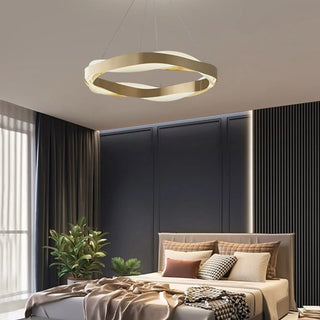
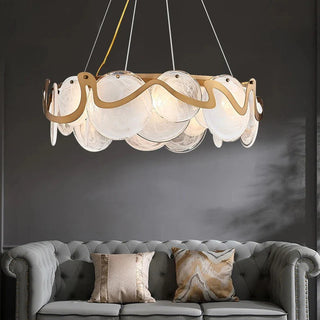

A hallway is a room nobody decorates for its own sake, and it shows. Most corridors get one centered fixture and call it done, which leaves a bright pool in the middle and dark stretches by either door. An entryway makes the opposite mistake just as often, one dim fixture asked to greet every guest and light the way upstairs at the same time. Here is how to actually space and size lighting for a hallway or entry.
Already know what you are shopping for? See our hallway light fixtures collection in ceiling lights, wall sconces, and entryway fixtures.
How far apart should hallway lights be spaced?
In a long corridor, skip the single oversized fixture. Run two or three smaller fixtures spaced 6 to 8 feet apart instead, which spreads light evenly along the whole length rather than leaving a bright pool in the middle and dark ends by the doors. This spacing rule comes from Mirodemi's own flush mount lighting guidance, and it applies just as well to wall sconces run along a corridor as it does to ceiling fixtures.
| Hallway length | Approach |
|---|---|
| Short (under 10 feet) | One centered fixture, ceiling or wall mounted |
| Long (10 feet or more) | Two or three fixtures spaced 6 to 8 feet apart |
Ceiling fixture or wall sconce for a hallway?
Hallway ceiling lights give even, efficient illumination and work well in any corridor with adequate ceiling height, especially where a hallway also needs to feel bright enough to double as a walkway during the day. Wall sconces add a more decorative, layered feel and suit a hallway meant to feel like part of the home's design rather than pure circulation space. Many hallways benefit from both: a ceiling fixture for baseline brightness and a sconce or two for warmth and texture along the way.
Ready to browse? See hallway lighting in modern and traditional designs.
What makes a good entryway light?
An entryway fixture sets the tone the moment someone walks in, so it can afford to be more of a statement than a hallway fixture further into the home. A pendant or small chandelier centered over the entry space reads as intentional, while a plain flush mount reads as an afterthought. Keep at least 7 feet of clearance from the floor to the bottom of any fixture near a doorway, so nobody has to duck coming in with bags or an umbrella.
What mistakes make a hallway feel poorly lit?
A few habits are behind most corridors that look dim no matter how bright the bulb is.
- Using a single fixture in a long hallway instead of two or three spaced 6 to 8 feet apart.
- Choosing a ceiling fixture with no wall sconces or accent light, which leaves the corridor feeling flat and clinical.
- Mounting an entryway fixture so low it interferes with coats, umbrellas, or tall guests.
- Matching hallway lighting to no other room in the home, so the transition between spaces feels disjointed.
Building your hallway and entryway lighting plan step by step
Work through it in this order.
- Measure the hallway. Under 10 feet, plan one fixture; longer, plan two or three spaced 6 to 8 feet apart.
- Decide between a ceiling fixture, a wall sconce run, or both, based on how decorative the hallway should feel.
- Choose a more deliberate statement piece for the entryway itself, sized to the space and mounted with at least 7 feet of clearance.
- Match finish and style loosely to the rooms the hallway connects, so the transition feels continuous.
- Add a dimmer if the hallway or entry is visible from a living space, so brightness can be tuned to the room it borders.
For low-ceiling rooms along the way, see our flush mount chandeliers guide.
Not sure how to space your hallway? Reach out to our team with your corridor length and we will help you plan it out.
Ready to shop the full range? Browse hallway and entryway lighting in ceiling lights, sconces, and statement entry fixtures.
About the author
Konstantin Khanasiuk is the founder of Mirodemi and works with luxury lighting day to day, helping homeowners and designers space hallway lighting properly instead of centering one fixture and accepting the dark ends that come with it.
Frequently asked questions
How far apart should lights be spaced in a hallway?
In a long corridor, run two or three fixtures spaced 6 to 8 feet apart rather than one large centered fixture. This spreads light evenly along the whole length instead of leaving a bright pool in the middle and dark ends near the doors.
Should I use ceiling lights or wall sconces in a hallway?
Either works, and many hallways benefit from both. Ceiling lights give even baseline brightness, while wall sconces add a more decorative, layered feel. Combine them where the hallway is meant to feel like part of the home's design.
How low can an entryway light hang?
Keep at least 7 feet of clearance from the floor to the bottom of any fixture near a doorway, so it clears coats, bags, and tall guests comfortably.
Should hallway lighting match the rest of the house?
Loosely, yes. Matching finish and style to the rooms a hallway connects makes the transition between spaces feel continuous rather than like an afterthought corridor.
Not sure which fixture fits your space?
Send room size, ceiling height and a photo. Our team will suggest sizes and models that fit your project.
Not sure which fixture fits your space?
Send room size, ceiling height and a photo. Our team will suggest sizes and models that fit your project.