


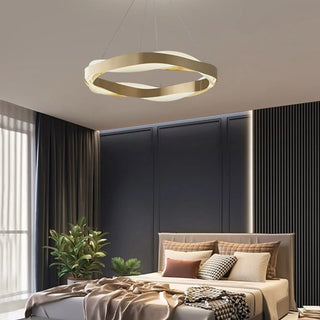
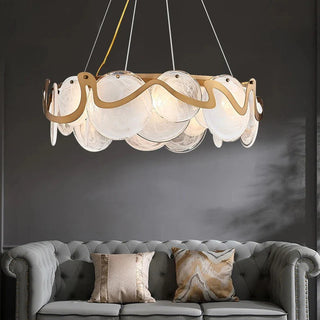

People use "Nordic" and "minimalist" almost interchangeably when they are shopping for lighting, and that blurs a real distinction. Minimalism is a design principle, doing more with less, that shows up across many styles. Nordic lighting is a specific design tradition rooted in Scandinavia, and its defining trait is not just restraint, it is warmth. A Nordic fixture is meant to feel cozy in a dark winter, not cold and clinical. Here is what actually separates the two.
Already know what you are shopping for? See our Nordic lighting collection in pendants, chandeliers, wall sconces, and table lamps.
What actually defines Nordic lighting design?
Nordic lighting is defined by minimalist forms, natural materials such as wood, marble, and glass, and soft, warm illumination that brings a sense of calm and simplicity to modern interiors. The style traces back to a climate with long, dark winters, where indoor light needed to feel inviting rather than institutional, which is the root of the concept most people know as hygge.
| Trait | What to look for |
|---|---|
| Materials | Natural wood, marble, and glass, rarely heavy ornamentation |
| Form | Clean, simple silhouettes without excess detail |
| Light quality | Soft, warm illumination rather than bright or clinical light |
| Feeling | Calm and cozy, built for long indoor evenings |
How is Nordic different from generic minimalist lighting?
Minimalism as a principle can apply to almost any style, industrial minimalism, modern minimalism, even a stripped-down Art Deco piece. Nordic lighting specifically pairs that restraint with natural materials and warmth. A minimalist fixture can be cold, all matte black metal and hard edges. A Nordic fixture uses the same restraint but chooses wood, soft glass, and warm bulb temperatures, so the result feels inviting rather than austere.
Ready to browse? See Nordic lighting across pendant, chandelier, sconce, and table lamp styles.
Which fixture types define the Nordic look?
The collection spans pendant lights and chandeliers, wall sconces, table lamps, floor lamps, and ceiling lights, all featuring the clean lines and natural materials typical of Scandinavian design.
- Nordic pendant lights, often in simple globe or dome shapes, for kitchens and dining areas.
- Scandinavian floor lamps in wood and warm metal for a cozy reading corner.
- Nordic wall sconces with subtle, understated profiles rather than statement pieces.
- Ceiling fixtures with a Nordic flair, clean geometric shapes without heavy crystal or ornate detail.
How is Nordic different from Japandi?
Japandi blends Japanese minimalism with Scandinavian warmth, layering in wabi-sabi textures, raw clay, and asymmetry alongside the Nordic base. Nordic lighting on its own skips that Japanese layer entirely and stays purely Scandinavian: wood, marble, glass, and warm light without the deliberate imperfection that defines wabi-sabi pieces. If you want the full Japanese-Scandinavian fusion, our Japandi lighting guide covers that distinction in more depth.
What mistakes make a room read as "cold minimalist" instead of Nordic?
A few habits are responsible for most Nordic-labeled rooms that miss the warmth the style depends on.
- Choosing only matte black metal fixtures with no wood or natural material anywhere in the room.
- Using cool white bulbs, which undercuts the soft, warm quality Nordic lighting is built around.
- Stripping the room so bare that it reads as unfinished rather than calm.
- Skipping layered light sources and relying on a single harsh overhead fixture.
Building your Nordic lighting plan step by step
Work through it in this order.
- Choose fixtures in natural materials: wood, marble, or soft glass, rather than only matte metal.
- Keep silhouettes simple and avoid heavy ornamentation or crystal detail.
- Use warm white bulbs throughout to preserve the cozy, hygge quality.
- Layer a ceiling fixture with at least one sconce, floor lamp, or table lamp for warmth at eye level.
- Leave some visual breathing room without stripping the space bare.
Not sure which pieces fit your space? Reach out to our team and we will help you plan it room by room.
Ready to shop the full range? Browse Nordic lighting in pendants, chandeliers, sconces, and lamps.
About the author
Konstantin Khanasiuk is the founder of Mirodemi and works with luxury lighting day to day, helping homeowners and designers tell true Nordic warmth apart from generic cold minimalism.
Frequently asked questions
What types of Nordic lighting fixtures are available?
The collection spans pendant lights and chandeliers, wall sconces, table lamps, floor lamps, and ceiling lights, all featuring the clean lines and natural materials typical of Scandinavian design.
What defines Nordic and Scandinavian lighting design?
Nordic lighting is defined by minimalist forms, natural materials such as wood, marble, and glass, and soft, warm illumination that brings a sense of calm and simplicity to modern interiors.
Is Nordic lighting the same as minimalist lighting?
Not exactly. Minimalism is a broader principle that can apply to many styles. Nordic lighting specifically pairs that restraint with natural materials and warm light, so it reads as cozy rather than cold.
How is Nordic different from Japandi?
Japandi adds a Japanese layer, wabi-sabi textures and asymmetry, on top of a Scandinavian base. Nordic lighting stays purely Scandinavian without that Japanese influence.
Sources
Mirodemi Nordic lighting collection page: material and design descriptions, collection FAQ Design history references: Scandinavian design principles and the concept of hygge in interior lighting
Not sure which fixture fits your space?
Send room size, ceiling height and a photo. Our team will suggest sizes and models that fit your project.
Not sure which fixture fits your space?
Send room size, ceiling height and a photo. Our team will suggest sizes and models that fit your project.