


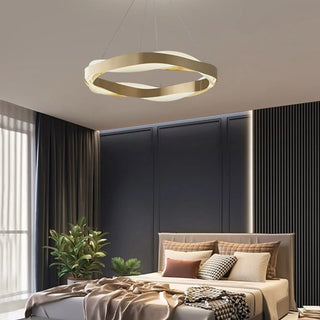
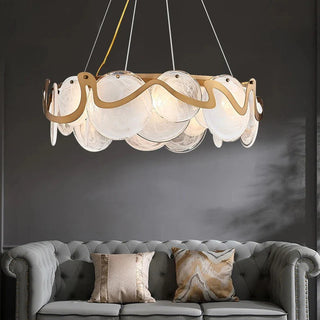

A luxury kitchen never runs on one light source. I build every high-end kitchen I light around three layers, ambient, task, and accent, then size and place each one on real numbers instead of guesswork. Get the brightness right, hang the island fixture at the correct height, and pick warm color temperature, and the room reads expensive even before you add a single decorative piece. Here is exactly how I plan it, layer by layer.
Shopping for the island fixture already? Here is the range I pull from most, our kitchen light fixtures, sized for islands from 4 feet to 10 feet and up.
What makes kitchen lighting read as luxury?
Three things separate a luxury kitchen from a builder-grade one: layered light sources instead of a single flush mount, correctly sized and positioned fixtures instead of whatever fit the electrical box, and warm, dimmable color temperature instead of flat white. None of this requires a bigger budget than a standard remodel, it requires a plan before you buy anything.
What is layered lighting, and why does a kitchen need three layers?
Layered lighting means combining ambient, task, and accent light instead of relying on one ceiling fixture to do everything. The American Lighting Association defines the three layers this way: ambient sets the base light level for the whole room, task lighting puts extra light exactly where you work, and accent lighting highlights a feature, a piece of stone, an open shelf, an island fixture itself.
In a kitchen, that usually breaks down as recessed ambient lighting across the ceiling, task lighting under the upper cabinets and over the island where you actually cut and cook, and accent lighting inside glass-front cabinets or along a stone backsplash. Skip a layer and the room falls back to that flat, single-source look no matter how expensive the fixture over the island is.
How bright should a luxury kitchen be?
Aim for 30 to 40 foot-candles of general ambient light across the kitchen and 50 to 75 foot-candles of task light on the counters and island, per the residential lighting levels published by the Lighting Design Lab. Task light needs that extra margin because your own body blocks the overhead ambient light and shadows the counter right where you are cutting.
I translate that into fixture choices this way: recessed or a statement ceiling fixture handles ambient, dedicated task lighting (under-cabinet strips, island pendants) handles the counters, and accent lighting stays lower output since it is there for mood, not visibility.
Where does each fixture type belong in a luxury kitchen?
A luxury kitchen splits its light sources by zone instead of leaning on one fixture: pendants or a chandelier over the island, recessed downlights around the perimeter, LED strips under the cabinets, and low-output accent lighting inside cabinets or shelving. Here is how I map each zone to a fixture type and the layer it serves.
| Zone | Best fixture type | Layer it serves | What to check before buying |
|---|---|---|---|
| Island or peninsula | Pendants, linear suspension, or a mini chandelier | Task, with an accent bonus | Length of the island, ceiling height, counter use |
| Perimeter ceiling | Recessed downlights | Ambient | Even coverage, dimmable driver |
| Under upper cabinets | LED strip or puck lights | Task | Shadow-free coverage on the counter, not just the backsplash |
| Sink | A single pendant or a pair of small sconces | Task, with accent value | Clearance above the faucet, glare into the window at night |
| Dining nook inside the kitchen | Small chandelier or a single statement pendant | Ambient plus accent | Table size versus fixture diameter, seated eye level |
| Glass-front cabinets or open shelving | Puck lights or a light strip inside the cabinet | Accent | Low heat output near dishware, dimmable |
How many pendant lights do you need over the island, and how high should they hang?
Space pendants 24 to 30 inches apart, center to center, and hang the bottom of each fixture 30 to 36 inches above the countertop, adding roughly 3 inches of extra height for every foot of ceiling above 8 feet. Leave at least 6 inches between the center of the end pendant and the edge of the island so nothing looks crowded against the corner.
- Measure the island length in inches, then divide by 4. That number is roughly how far each pendant's center should sit from its nearest end.
- Count fixtures by island length: under 5 feet takes one or two pendants, 6 to 8 feet takes two or three, 8 feet and longer usually takes three, or one long linear fixture instead.
- Check the pendant diameter against the island width. As a starting point, the fixture diameter should run close to one third of the island's width, then adjust for how bold you want the piece to read.
- Hang the fixture and measure from the counter, not the ceiling, since counter height is what a person standing at the island actually sees.
That is the fast version. If your island has an unusual shape or you want the full breakdown with more sizing scenarios, I cover it in more depth in Kitchen Island Lighting: How to Choose the Perfect Lighting.
What color temperature reads as luxury?
Warm white, 2700K to 3000K, is what reads as luxury in a kitchen. Neutral white, 3500K to 4000K, reads clean and functional but colder, closer to a showroom than a home. I put the whole kitchen on 2700K to 3000K with dimmers on every circuit, ambient, task, and accent separately if the budget allows, so the room can shift from bright morning prep light to a dim, warm mood for entertaining without changing a single fixture.
One detail people miss: mixing color temperatures in the same room, say 3000K recessed lighting with 4000K under-cabinet strips, is the fastest way to make an expensive kitchen look cheap. Match every layer to the same temperature, or stay within 200K of it.
What materials and finishes define luxury kitchen lighting in 2026?
Aged brass, patina bronze, and mixed materials, glass paired with metal or stone, are carrying luxury kitchens into 2026. Sculptural and organic shapes are replacing strictly geometric ones, and textured glass, ribbed or fluted, is showing up on pendants and linear fixtures to add depth without adding visual weight.
For a kitchen that ages well rather than dating fast, I lean toward one dominant metal finish repeated across the island fixture, cabinet hardware, and faucet, then let the fixture's shape or glass texture carry the personality instead of piling on multiple competing finishes.
Pendant vs. linear suspension vs. mini chandelier: which fits your island?
| Fixture type | Best island shape | Visual weight | Typical count |
|---|---|---|---|
| Individual pendants | Standard rectangular island | Light to medium, easy to scale in groups | 2 to 3 |
| Linear suspension | Long or narrow islands, 8 feet and up | Even, low-profile | 1 fixture spanning the length |
| Mini chandelier | Square or statement islands | Heaviest, most decorative | 1 to 2 |
Our pendant lighting collection covers all three, filterable by finish and drop length, if you want to compare real dimensions side by side before you settle on a count.
What mistakes make a kitchen lighting plan look cheap?
The same five mistakes make an expensive kitchen look unfinished: a single ceiling fixture standing in for all three layers, pendants hung at the wrong height, mixed color temperatures between fixtures, an island fixture sized to the ceiling box instead of the counter below it, and no dimmers anywhere in the room. I see at least one of these on almost every kitchen I get called in to fix.
- One ceiling fixture doing the job of three layers, so the room is either too dim to cook in or too flat to feel finished.
- Pendants hung at ceiling-driven height instead of counter-driven height, so they sit too high to do any real task work.
- Mixed color temperatures across fixtures, which reads as a maintenance issue even when every bulb is brand new.
- A fixture sized to the ceiling opening instead of the island, so it looks like an afterthought over a large surface.
- No dimmers, which means the kitchen only has one mood, whatever the fixture manufacturer set at full output.
Building your luxury kitchen lighting plan, step by step
Plan a luxury kitchen lighting scheme in this order: measure the room, set your ambient brightness target, size and hang the island fixture, add task lighting under the cabinets, pick one warm color temperature for every layer, then layer in accent lighting last. Working in that order keeps every layer sized off real numbers instead of whatever fixture caught your eye first.
- Measure your island length, counter height, and ceiling height.
- Set your ambient target, 30 to 40 foot-candles, with recessed or a ceiling fixture on a dimmer.
- Pick your island fixture count and spacing using the formula above, then hang it 30 to 36 inches above the counter.
- Add under-cabinet task lighting so the counters hit 50 to 75 foot-candles without relying on the island fixture alone.
- Choose one warm color temperature, 2700K to 3000K, across every layer.
- Add one or two accent touches, inside a cabinet, along open shelving, and put everything on separate dimmers if your electrical plan allows it.
Ready to shop the island piece that anchors the whole plan? Browse kitchen light fixtures sized for islands of every length, or send me your island length and ceiling height through the free custom size request and I will recommend a fixture count and drop length for your space, no cost.
About the author
Konstantin Khanasiuk is the founder of Mirodemi and works with luxury lighting day to day, helping homeowners and designers size and choose fixtures for kitchens, foyers, and staircases. He writes from hands-on experience selecting and shipping fixtures for demanding, high-traffic rooms.
Frequently asked questions
What is considered luxury kitchen lighting?
Layered lighting, ambient, task, and accent, sized and placed on real measurements rather than a single overhead fixture, in a warm color temperature (2700K to 3000K) with dimmers on every circuit. The fixture finish and shape matter, but the layering and sizing are what actually separate a luxury result from a builder-grade one.
How many pendant lights should hang over a kitchen island?
One or two for islands under 5 feet, two or three for 6 to 8 foot islands, and three or a single linear fixture for islands 8 feet and longer. Space individual pendants 24 to 30 inches apart, center to center.
What color temperature should luxury kitchen lighting be?
2700K to 3000K across every fixture in the room. Mixing warmer and cooler temperatures between the ceiling, under-cabinet, and island lights is one of the fastest ways to make an otherwise expensive kitchen look mismatched.
How bright should kitchen task lighting be compared to ambient lighting?
Task lighting on the counters and island should hit roughly 50 to 75 foot-candles, noticeably brighter than the 30 to 40 foot-candles of general ambient light across the rest of the kitchen, since your own body shadows the counter when you are standing at it.
Sources
Not sure how many pendants your island needs?
Share your island length and ceiling height. We will suggest pendant size, count and spacing with matching models.
Not sure how many pendants your island needs?
Share your island length and ceiling height. We will suggest pendant size, count and spacing with matching models.