



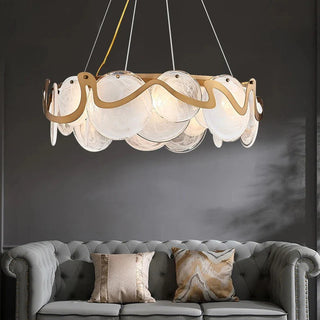

A nursery lit by a single overhead fixture usually means one of two problems: full brightness at a 3 a.m. diaper change, or dim light that is not enough to read a label at the changing table during the day. I split nursery lighting into a daytime ambient layer, a task layer at the changing table, and a warm nightlight for overnight check-ins, each dimmed differently by time of day. Here is the brightness target for each layer, the color temperature that keeps a baby's sleep on track, and where to place fixtures so nothing is aimed at the crib.
Already know what you're shopping for? Here are the nursery light fixtures sized for ceiling fixtures, wall lights, and nightlights in one room.
How bright should a nursery be?
Daytime ambient light needs roughly 10 to 20 foot-candles, enough for play and for you to see clearly across the room without the space feeling clinical. That level works for morning and afternoon hours when the goal is visibility, not sleep.
Task light at the changing table needs roughly 30 to 50 foot-candles, bright enough to read a medication label or check a diaper rash without squinting, but aimed at the table rather than spread across the whole room. A dedicated lamp or wall light at the changing station covers this without raising the brightness everywhere else.
Put both layers on a dimmer that steps down through the day: full brightness for morning play, roughly half for an evening feeding, and the lowest usable setting for a middle-of-the-night diaper change. A fixed brightness with no dimmer forces you to choose between too bright for a 3 a.m. change and too dim to see anything during the day.
What color temperature is best for a nursery?
Daytime play and feeding sessions work well under 3000K to 3500K, a soft white bright enough for clear visibility without feeling harsh. Save anything cooler than that for rooms where alertness matters more than winding down.
Evening feedings and nighttime check-ins call for 2700K or warmer. Research on evening light exposure in young children has found that even dim blue-white light can cut melatonin production sharply, which works against the goal of getting a baby back to sleep. A nightlight in a warm amber or red tone, kept dim, does the job with the least disruption to sleep.
| Time or task | Recommended color temperature |
|---|---|
| Daytime play, feeding, diaper changes | 3000K to 3500K |
| Evening feedings and wind-down | 2700K |
| Overnight check-ins and nightlight | Warm amber or red, dimmest setting |
Avoid cool white light (5000K and above) in the nursery entirely, especially after bedtime. It is the tone most likely to work against melatonin and keep a baby alert when the goal is the opposite.
Ready to match a fixture to these numbers? Browse nursery light fixtures filtered by style and color temperature, sized for ceilings, walls, and nightstands.
Where should nursery lighting be placed for safety?
Never center the main ceiling fixture directly above the crib. A baby lying on their back looks straight up, and a bright light aimed down at their face is uncomfortable at any hour. Offset the primary fixture toward the center of the room instead, away from the crib's footprint.
Choose a flush-mount or recessed fixture for the main light rather than a hanging pendant. That removes any cord, chain, or glass shade within reach once the crib mattress is raised or a toddler starts climbing, and it keeps the ceiling free of anything that could work loose over time.
Keep the changing table or glider light on a wall mount or a stable table base, with the cord routed along the wall and secured out of reach, never draped across the side of the crib. For a wall-mounted option near the glider that keeps the side table clear entirely, I cover placement and style separately in our guide to wall sconces in modern interiors.
What mistakes make a nursery feel harsh or overlit at night?
The same handful of mistakes show up on almost every nursery lighting plan I get called in to fix.
- A single overhead fixture with no dimmer, forcing full brightness for every middle-of-the-night diaper change.
- The main fixture centered directly over the crib instead of offset toward the room.
- Cool white light used for nighttime feedings, which works against the melatonin a baby needs to fall back asleep.
- A hanging pendant or fixture with a cord or chain within eventual reach of the crib rail.
- No dedicated task light at the changing table, so diaper changes happen under harsh overhead light or light too dim to see clearly.
Building your nursery lighting plan step by step
Plan a nursery in this order: place the main fixture safely, add task light at the changing table, then layer in a dimmer and a warm nightlight. Working in that order keeps safety and function ahead of how the room looks.
- Add a primary ceiling fixture offset from the crib, flush-mount or recessed rather than hanging.
- Put the main fixture on a dimmer that runs from full daytime brightness down to a low nighttime glow.
- Add a dedicated task light at the changing table or glider, wall-mounted or on a stable base, aimed at the work surface.
- Choose 3000K to 3500K for fixtures used during the day and keep anything used after bedtime at 2700K or warmer.
- Add a separate warm amber or red-toned nightlight for overnight check-ins, positioned off to the side of the crib.
- Test the full dim range before the nursery is finished, down to the lowest setting you will actually use for late-night changes.
Ready to see fixtures sized for these numbers? Browse nursery light fixtures built for ceilings, walls, and nightstands, with color temperature listed on every product.
Not sure what setup fits an unusual room layout? Send me your crib position, changing table location, and window direction through the free custom lighting quote and I will recommend a layout and brightness plan for your space, no cost.
About the author
Konstantin Khanasiuk is the founder of Mirodemi and works with luxury lighting day to day, helping homeowners and designers size and choose fixtures for nurseries, bedrooms, kitchens, and living rooms. He writes from hands-on experience selecting and shipping fixtures for real rooms, not showroom mockups.
Frequently asked questions
How bright should a nursery be?
Roughly 10 to 20 foot-candles of ambient light for daytime, with 30 to 50 foot-candles of task light at the changing table. Dim both down for evening and overnight use.
What color temperature is best for a nursery?
3000K to 3500K for daytime play and feeding. Switch to 2700K or warmer, or a warm amber or red nightlight, for evening and overnight use.
Where should the main light fixture go in a nursery?
Offset toward the center of the room, never directly above the crib. A baby lying on their back looks straight up, so a bright light aimed down at their face is uncomfortable.
Do I need a separate nightlight if the main fixture dims?
Yes. A warm amber or red nightlight lets you check on a sleeping baby without raising the main fixture off its lowest setting, which keeps the light closest to the crib as dim as possible.
Sources
Illuminating Engineering Society (IES): recommended residential lighting levels
Pediatric sleep research on evening light exposure and melatonin suppression in young children
Not sure which fixture fits your space?
Send room size, ceiling height and a photo. Our team will suggest sizes and models that fit your project.
Not sure which fixture fits your space?
Send room size, ceiling height and a photo. Our team will suggest sizes and models that fit your project.