


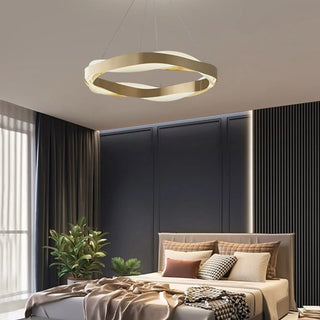
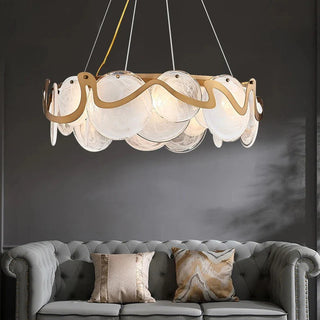

All-black lighting works for one reason: against a pale wall the fixture reads as a graphic silhouette, and after dark it all but disappears. Both effects come from the same property — black absorbs light instead of bouncing it back.
That property is also the catch, and it is why most rooms with black fixtures end up under-lit. This guide covers where black lighting belongs room by room, how much light to plan for, which black finish to choose, and the mistakes that make an elegant fixture look like a dark blob on the ceiling.
From the shade to the fitting, black lights make a statement that outlasts trends. This article explores the sophistication of all-black lighting, showing how these fixtures create contrast and depth while still contributing to a cosy ambiance — a natural match for minimalist and Scandinavian interiors.
Design Philosophy: Immerse your living spaces in the timeless elegance of all-black lighting, where contrasts meet warmth for a truly modern aesthetic.
1. Unveiling the All-Black Aesthetic:
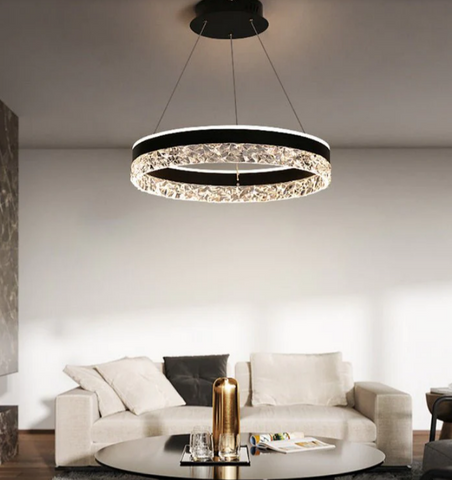
Enter the era of all-black lighting—fixtures that redefine elegance with their sleek, monochromatic design. From pendant lights to floor lamps, the all-black aesthetic effortlessly blends with various interior styles, offering a contemporary touch that is both bold and refined.
Design Insight: Choose lighting fixtures where both the shade and fitting are entirely black for a cohesive and impactful visual statement.
2. Contrasts and Depth: Mastering the Play of Shadows:
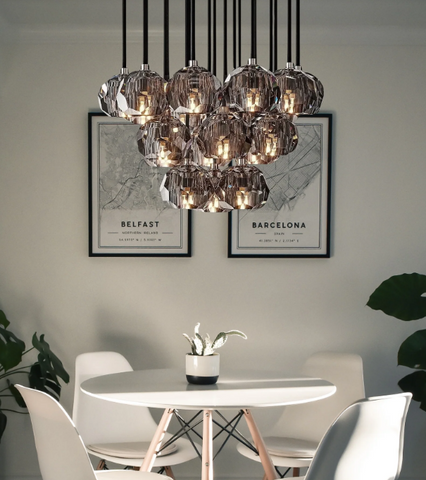
Black lights become more than just sources of illumination; they are sculptors of shadows and contrasts. Against light-colored walls and single-colored surfaces, these fixtures create a dynamic interplay of light and shadow, adding depth and visual interest to your living spaces.
Design Insight: Experiment with placement to maximize the play of shadows, highlighting the unique contours of your black lighting fixtures.
3. Cozy Ambiance in Black and White: Warmth Amidst Darkness:
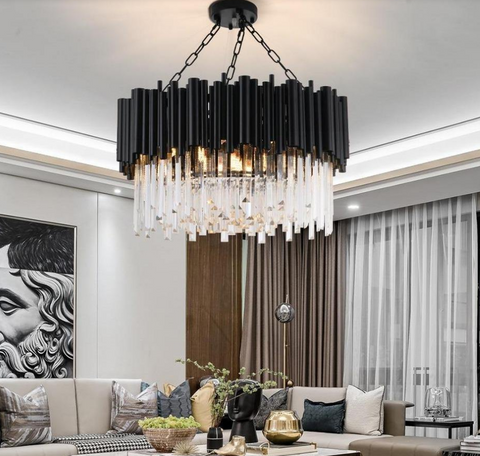
Contrary to the perception of black as cold or stark, the combination of all-black lights with warm white light sources can create a cozy and inviting ambiance. This interplay of darkness and warmth offers the perfect setting for relaxation and unwinding, transforming your space into a sanctuary of comfort.
Design Insight: Opt for warm white LED bulbs to soften the all-black aesthetic and infuse a sense of warmth into your interiors.
4. Minimalist and Scandinavian Harmony: A Perfect Duo:
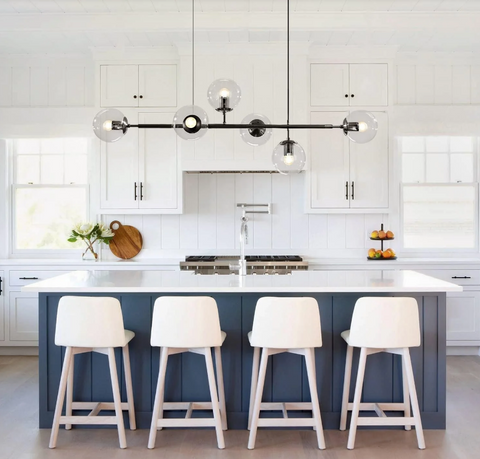
All-black lighting seamlessly integrates into the ethos of minimalist and Scandinavian interior design styles. Its clean lines and monochromatic simplicity make it a versatile choice for spaces that celebrate the essence of less-is-more, adding a touch of sophistication without overwhelming the visual landscape.
Design Insight: Pair all-black lighting with neutral tones and natural textures to enhance its compatibility with minimalist and Scandinavian design elements.
5. Timeless Appeal: Beyond Trends and Seasons:
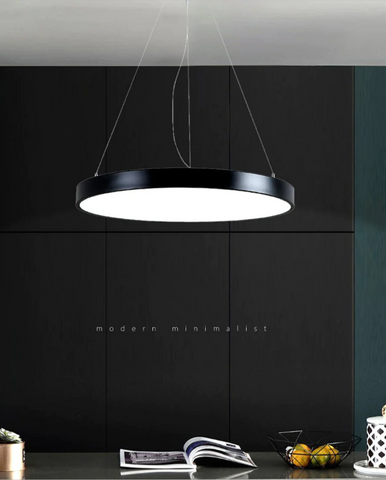
The beauty of all-black lighting lies in its timeless appeal. Beyond fleeting trends, these fixtures stand as enduring pieces that effortlessly adapt to evolving interior styles. Invest in the longevity of design with all-black lighting that transcends the boundaries of seasons and aesthetics.
Design Insight: Consider all-black lighting fixtures as long-term investments, contributing to the enduring elegance of your living spaces.
6. Room by Room: Where Black Lighting Actually Works
Living room. Black fixtures perform best here, where pale walls and open floor let them read as silhouettes. One black chandelier over the seating area does more than three smaller fixtures scattered across the ceiling. Size it by adding the room's length and width in feet and reading the total as inches of diameter — a 14 ft by 16 ft room points to roughly a 30 in fixture. Our chandelier size guide covers drop lengths and high ceilings.
Dining room. The easiest win in the house: the table already defines where the eye goes, and a dark shade frames it. Hang the bottom of the fixture 30–34 in above the tabletop. An opaque black shade throws light straight down, so the pool of light lands on the table and the rest of the room stays soft. Browse dining room lighting for shapes that suit rectangular and round tables.
Kitchen. Black pendant lights over an island are task lighting, not decoration. Hang them 30–36 in above the counter, which usually puts the bottom around 72 in from the floor, and add under-cabinet lighting so the worktop is not lit by the pendants alone.
Bedroom. Black works here only if it is repeated. One black pendant among pale wood and white linen looks like an accident; the same pendant with black-framed wall sconces either side of the bed looks like a scheme. Mount bedside sconces around 60–66 in from the floor.
Hallways and stairwells. Dark fixtures add rhythm to a corridor, but keep at least 7 ft of clear headroom anywhere people walk underneath.
7. The Practical Catch: Black Shades Need More Light
A pale shade bounces light outward and lifts the whole room. An opaque black shade does not: it sends light up and down through the open ends and absorbs the rest. The fixture looks superb and the room still ends up under-lit.
- Work from lumens, not watts. A common rule of thumb is roughly 20 lumens per square foot of ambient light in a living room or bedroom, and 30–40 in a kitchen. A 12 ft by 15 ft living room — 180 sq ft — wants around 3,600 lumens in total.
- Do not expect one black fixture to carry that. An LED lamp sold as a 60W equivalent gives around 800 lumens; a 40W equivalent gives 400–470. Even a six-arm fixture tops out near 4,800 lumens before the shade absorbs anything.
- Layer instead. Pair the ceiling fixture with a table lamp or two and a floor lamp. Three modest sources at different heights light a room better than one bright one.
- Keep the light warm. Stay at 2700K. Against black metal, cool white at 4000K and above reads harsh and industrial.
- Look inside the shade. Fixtures finished black outside and white, cream or gold inside give you the silhouette and a far wider spread of light. Black inside as well means accent lighting.
8. Matte, Satin, Gloss or Textured: Which Black to Choose
"Black" is not one finish, and the difference shows more in a real room than in a product photograph.
Matte black absorbs light almost completely, so the fixture reads as a clean, flat shape with no highlights. It is the safest choice in a minimalist or Scandinavian room. Its drawback is practical: matte shows dust and fingerprints, so plan on a dry microfibre wipe every few weeks.
Satin and semi-gloss black catch a soft highlight along curves and edges — what stops a sculptural fixture from flattening into a silhouette — and hide dust better than matte.
Gloss black behaves almost like a mirror. It suits Art Deco and glamorous schemes and looks striking against marble or brass, but it reflects every lamp and window.
Textured and hammered black adds depth without shine — useful when a large fixture would otherwise look like a solid block.
Black with a metal accent. Brass, gold or copper keeps an all-black scheme from feeling heavy. Repeat that accent two or three times elsewhere — a lamp base, a mirror frame, cabinet hardware — so it reads as a decision. Minimalist fixtures in black and brass do this particularly well.
9. Five Mistakes That Make Black Lighting Look Wrong
- Black on a dark wall. The whole effect depends on contrast; on charcoal or deep green the fixture disappears. If the walls are dark, choose one with a visible light source or a metallic accent.
- Undersizing it. Black shapes read smaller than pale ones of the same dimensions, so a fixture that measured correctly on paper often looks timid. Between two sizes, take the larger.
- Mixing three or four blacks. Matte, gloss and textured black in one sightline look like mismatched replacements. Pick one finish and repeat it.
- Relying on a single fixture. The most common complaint after installation: the room is beautiful and too dim. Layer the light.
- Cool-white bulbs. At 4000K and above, black fixtures stop looking elegant and start looking like commercial fittings.
All-black lighting is not a trend that needs a date on it. It works when the room gives it contrast, when the light is warm and layered, and when the finish is repeated somewhere else. Get those three right and a black fixture stays right for as long as the room does.
Frequently Asked Questions
Does black lighting make a room look smaller or darker?
The fixture itself does not shrink a room — against pale walls it usually makes the ceiling read as taller. What it can do is under-light the space. An opaque black shade sends light up and down rather than outward, so budget for the whole room: roughly 20 lumens per square foot of ambient light in a living room or bedroom, and add table or floor lamps rather than expecting one dark fixture to do all the work.
What colour bulb should I use with black fixtures?
Warm white at 2700K. Against black metal, cool white at 4000K and above looks harsh and commercial and strips out the warmth that keeps a dark scheme from feeling severe. Use the same colour temperature in every lamp within one fixture — mixing two is instantly visible on a multi-arm chandelier. Choose dimmable lamps and an LED-compatible trailing-edge dimmer.
How high should a black chandelier or pendant hang?
Over a dining table, the bottom of the fixture should sit 30–34 in above the tabletop. Over a kitchen island, allow 30–36 in above the counter, which typically puts the bottom around 72 in from the floor. Anywhere people walk underneath, keep at least 7 ft of clear headroom. Bedside and hallway sconces generally sit around 60–66 in from the floor.
What size black fixture does my room need?
Add the room's length and width in feet and read the total as inches of diameter: a 14 ft by 16 ft room points to roughly a 30 in fixture. Over a dining table, size to the table instead — about one third of its length, or one half to two thirds of its width. One adjustment is specific to black: dark shapes read smaller than pale ones, so between two sizes take the larger.
Does black lighting work with any interior style?
It works best in minimalist, Scandinavian, industrial and modern schemes, where pale walls and restrained furniture give it the contrast it needs. It is harder in heavily patterned or dark-walled rooms, where it either disappears or competes. The reliable test is repetition: if black already appears elsewhere — window frames, a table base, cabinet hardware — a black fixture reads as part of the scheme rather than an isolated dark object.
Still Deciding? Let Our Specialists Help
Not sure which all-black fixture fits your space and style? Get a free lighting project review from our design team, and we'll help you choose the right finish, scale, and placement.
Working on a trade or custom project? Request a trade quote or get a custom lighting quote.
About the author: Konstantin Khanasiuk researches and writes about lighting design trends for Mirodemi, helping homeowners and designers choose fixtures that balance style, quality, and practicality.
Not sure which fixture fits your space?
Send room size, ceiling height and a photo. Our team will suggest sizes and models that fit your project.
Not sure which fixture fits your space?
Send room size, ceiling height and a photo. Our team will suggest sizes and models that fit your project.