


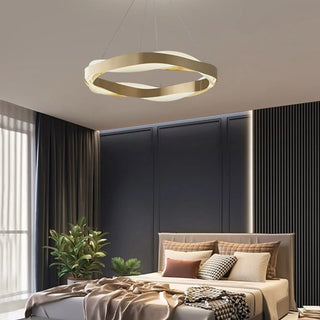
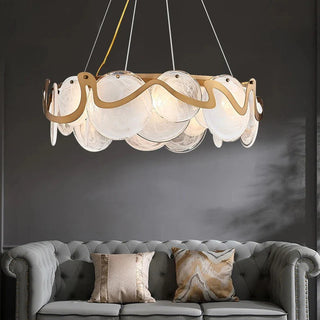

"Retro" is a wider umbrella than most of the other vintage-adjacent labels. Where Art Deco and Mid-Century point to a specific decade and material set, retro lighting spans American diner-style pendants, French and Italian vintage wall lamps, brass chandeliers with milk-glass shades, and industrial desk lamps, all under one label. That breadth is useful for shopping variety, but it also means "retro" alone does not tell you much about what a fixture will actually look like. Here is how to sort out the category.
Looking for fixtures already sorted into this category? See our retro lighting fixtures collection.
What sub-styles actually fall under "retro lighting"?
Retro is really several traditions grouped together, and knowing which one you are looking at helps you shop with more precision.
| Sub-style | Look | Typical materials |
|---|---|---|
| American retro | Diner and mid-century-adjacent shapes | Chrome, colored glass, enamel |
| French and Italian vintage | Elegant, slightly ornate wall lamps | Brass, fabric shades, milk glass |
| Art Deco-adjacent retro | Geometric pendants and sconces | Brass, chrome, cut glass |
| Industrial retro | Exposed-bulb desk and floor lamps | Blackened metal, exposed hardware |
A single retro collection can hold all four of these at once, which is why two "retro" fixtures can look almost nothing alike.
Which retro sub-style suits which room?
Matching sub-style to room use matters more than picking randomly from the retro category.
- Milk-glass brass chandeliers over a dining table, where the softer glow suits a shared meal.
- French or Italian vintage wall sconces in a bedroom or corridor, for warm, ambient wall light.
- Industrial desk and floor lamps with exposed hardware in a home office or study.
- Candle-shaped crystal chandeliers or Art Deco-adjacent pendants in a living room or entry, as a statement piece.
Ready to browse? See retro lighting fixtures across pendant, wall, floor, and table styles.
How do I avoid mixing incompatible retro sub-styles?
Because retro spans several traditions, it is easy to combine two fixtures that technically both say "retro" but clash in person.
- Pick one sub-style per room. Industrial exposed-bulb fixtures and delicate French milk-glass wall lamps rarely sit well together in the same space.
- Match metal tone across fixtures within a room, blackened metal for industrial, brass or chrome for the others.
- Let one fixture be the statement piece, a chandelier or standout pendant, and keep everything else in that room quieter.
- If you are unsure which sub-style a fixture belongs to, check the materials first. Exposed metal and hardware signal industrial. Milk glass and brass signal French or Italian vintage. Cut glass and geometry signal Art Deco-adjacent.
What mistakes make a retro room look like a costume instead of a style?
A few habits push a retro room from "intentional" to "themed."
- Combining fixtures from three or more different retro sub-styles in one room.
- Choosing every fixture in the same exposed-bulb industrial look, which can start to feel like a restaurant rather than a home.
- Ignoring bulb temperature. Retro fixtures generally read best with warm light, and cool white bulbs undercut the vintage feel.
- Treating "retro" as one fixed look rather than checking which sub-style a specific piece actually belongs to before buying.
Building your retro lighting plan step by step
Work through it in this order.
- Decide which retro sub-style fits your room: American, French/Italian vintage, Art Deco-adjacent, or industrial.
- Choose one statement fixture in that sub-style for the room's main light source.
- Match secondary fixtures, sconces or lamps, to the same sub-style and metal tone.
- Use warm white bulbs throughout.
- Limit yourself to one sub-style per room to keep the look coherent.
For general chandelier sizing once you've picked a fixture, see our chandelier size guide.
Not sure which retro sub-style fits your home? Reach out to our team and we'll help you sort it out.
Ready to shop the full range? Browse retro lighting fixtures across every sub-style.
About the author
Konstantin Khanasiuk is the founder of Mirodemi and works with luxury lighting day to day, helping homeowners and designers navigate broad style categories like retro without accidentally mixing incompatible sub-traditions in the same room.
Frequently asked questions
Is retro lighting the same as vintage lighting?
The terms overlap heavily and are often used interchangeably. In practice, retro tends to describe fixtures that reference a past era's look while using current materials and technology, while vintage sometimes implies an actual period piece.
What retro sub-styles are most common?
American retro, French and Italian vintage, Art Deco-adjacent geometric pieces, and industrial exposed-bulb fixtures are the four you will see most often grouped under the retro label.
Can I mix different retro sub-styles in one home?
Yes, across different rooms. Within a single room, stick to one sub-style so the fixtures read as a coordinated choice rather than a random mix.
What bulb temperature works best for retro fixtures?
Warm white almost always. Cool white light tends to flatten the brass, milk glass, and colored glass materials that define most retro sub-styles.
Sources
Design history references: American retro, French and Italian vintage lighting traditions, industrial lighting design Interior design guidance: coordinating vintage-adjacent sub-styles within a single room
Not sure which fixture fits your space?
Send room size, ceiling height and a photo. Our team will suggest sizes and models that fit your project.
Not sure which fixture fits your space?
Send room size, ceiling height and a photo. Our team will suggest sizes and models that fit your project.