


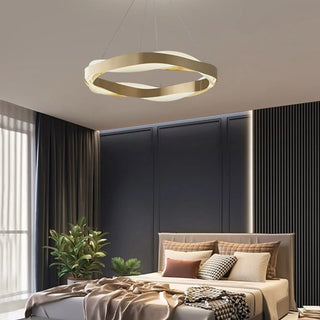
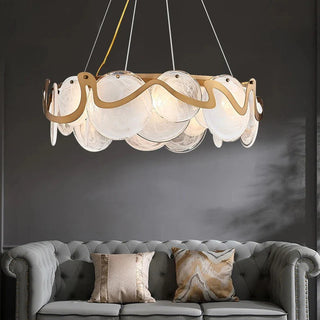

"Contemporary" and "modern" get used interchangeably in lighting descriptions, but they mean different things. Modern refers to a specific mid-20th-century design tradition. Contemporary means whatever is trending right now, which is why the look shifts over time, mixed materials, integrated LED, cleaner lines than a decade ago, but no single fixed silhouette. Here is how to shop the category on purpose instead of guessing.
Looking for fixtures already built around the current trend? See our contemporary light fixtures collection.
What actually separates contemporary from modern lighting?
The distinction matters more than it sounds, because a fixture labeled one or the other implies a different design lineage entirely.
| Trait | Contemporary | Modern |
|---|---|---|
| Time reference | Whatever is current right now | Specifically mid-20th century (1940s-60s) |
| Materials | Mixed metals, integrated LED, varied finishes | Walnut, teak, brass, organic curves |
| Silhouette | Shifts with current trends | Fixed set of period-specific shapes |
| Technology | Frequently built around integrated LED modules | Original pieces predate LED entirely |
If a fixture description says "modern" but shows a starburst or tapered-leg silhouette, it is really mid-century. If it says "contemporary" and shows clean lines with mixed metal finishes and integrated LED, that is the current-trend definition.
Which fixture types define the current contemporary look?
A handful of fixture types show up consistently across the contemporary category right now.
- Pendant lights with mixed materials, glass paired with metal or stone, over kitchen islands and dining tables.
- Statement chandeliers that use LED integration as part of the design itself, not just as a bulb choice.
- Wall sconces with clean, unadorned lines for hallways and accent walls.
- Floor lamps with sleek profiles and adjustable or dimmable LED for reading corners and living rooms.
Ready to browse? See contemporary light fixtures in pendant, chandelier, sconce, and floor styles.
How do I choose contemporary lighting room by room?
Contemporary fixtures work best when the fixture type matches the room's actual use, not just its overall style.
- Kitchen and dining: pendant lights or a statement chandelier over the island or table, sized to the surface below it.
- Living room: a floor lamp or wall sconces for ambient light, with one larger fixture as a visual anchor.
- Bedroom: wall sconces flanking the bed free up nightstand space and give a cleaner, more current look than table lamps.
- Hallway and entry: simple linear or geometric wall sconces, kept understated so they do not compete with the front door or artwork.
What mistakes make a room look dated instead of contemporary?
A few habits push a room toward "dated modern" instead of current contemporary.
- Mixing more than two metal finishes in the same room, which reads as inconsistent rather than intentional.
- Choosing a fixture purely for its shape without checking whether it uses integrated LED or standard bulbs, since exposed incandescent bulbs read as a different, older aesthetic.
- Sizing a chandelier or pendant too small for the table or island below it, which undercuts an otherwise current design.
- Assuming "contemporary" is a fixed look. Because the category tracks current trends, a fixture that felt contemporary five years ago may already read as slightly dated today.
Building your contemporary lighting plan step by step
Work through your space in this order.
- Confirm you actually want current-trend lighting, not mid-century modern. The two get confused constantly.
- Pick fixture type by room function: pendant or chandelier for kitchen and dining, sconces for bedroom and hallway, floor lamps for living room.
- Limit metal finishes to one or two per room.
- Check each product page for LED integration and color-temperature options before buying.
- Size chandeliers and pendants to the table or island they sit above.
For general chandelier sizing, see our chandelier size guide.
Not sure which fixtures fit your space? Reach out to our team and we'll help you plan it out.
Ready to shop the full range? Browse contemporary light fixtures for every room in the home.
About the author
Konstantin Khanasiuk is the founder of Mirodemi and works with luxury lighting day to day, helping homeowners and designers tell current-trend contemporary lighting apart from period-specific styles like mid-century modern.
Frequently asked questions
Is contemporary lighting the same as modern lighting?
No. Modern refers to a specific mid-20th-century design tradition with fixed silhouettes like tapered legs and starburst forms. Contemporary refers to whatever is trending currently, which shifts over time.
Are contemporary light fixtures energy efficient?
Many use integrated LED modules or sockets built for LED bulbs, which use less energy and last longer than incandescent options. Check each product page for the specific light source and wattage.
How many metal finishes should I mix in one room?
One or two at most. Mixing three or more finishes in the same room tends to read as inconsistent rather than intentional.
How do I know if a fixture will still look contemporary in a few years?
There is no guarantee, since the category tracks current trends by definition. Choosing simpler, cleaner silhouettes over trend-heavy details tends to age better than chasing the most current shape.
Sources
Interior design guidance: distinguishing contemporary and modern design terminology Industry references: LED integration trends in current lighting fixture design
Not sure which fixture fits your space?
Send room size, ceiling height and a photo. Our team will suggest sizes and models that fit your project.
Not sure which fixture fits your space?
Send room size, ceiling height and a photo. Our team will suggest sizes and models that fit your project.